Taking Talent Beyond the Classroom: DiSE Students Find Their Path in Tenerife
A two week visit to Spain offered talented but disadvantaged young athletes at South Gloucestershire and Stroud College the opportunity to build confidence, gain real-world work experience and develop career-ready skills all while gaining valuable evidence towards their Diploma in Sporting Excellence (DiSE) qualifications.
Countries covered: | United Kingdom, Spain |
|---|---|
Period: | 2019 - 2022 |
Funding: | €191,118.00 |
Type: | VET learner and staff mobility |
Background
For talented young athletes, reaching elite level takes dedication, discipline and resilience. But sporting talent does not always come with equal access to opportunities.
South Gloucestershire and Stroud College (SGS) set out to give talented but disadvantaged students on their Diploma in Sporting Excellence (DiSE) programme the chance to combine elite sporting development with real-world work experience, cultural learning and personal growth in an international setting.
Funded by an Erasmus+ mobility grant and delivered in partnership with the FU International Academy in Tenerife, Spain, the two-week placement offers a safe, structured and challenging environment where students develop coaching, communication, leadership, independence and cultural awareness.
Objectives
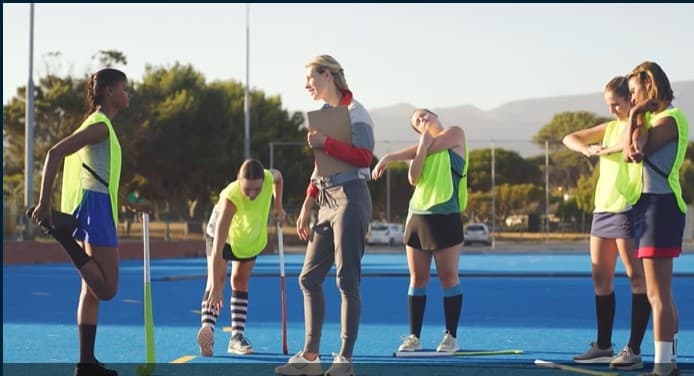
For young people balancing academic study with the demands of elite sport, the two-week Tenerife placement offered something different. Participants coached and mentored children in under-resourced schools, gaining valuable real-world experience while collecting live assessment evidence towards their DiSE qualification and continuing the training required for an England performance pathway.
The project also looked beyond sport. Recognising that only a small proportion of athletes will go on to professional sporting careers, SGS wanted participants to explore wider opportunities in coaching, sports science, education, management and other areas of the sporting sector.
Alongside work experience, students trained with experienced coaches and other athletes, including sessions linked to altitude training on Mount Teide. They also took part in activities such as CrossFit, padel tennis and Spanish language lessons, as well as cultural experiences including salsa, flamenco, Spanish cooking and stargazing.
Implementation
The success of the project was built on a strong partnership. SGS and FU International Academy have worked together for more than 17 years, developing trusted relationships with local schools and creating a safe and structured environment for young people.
FU International Academy staff supported participants throughout the placement, providing Spanish lessons, accompanying groups to activities and offering help with language, cultural or welfare issues. This long-standing relationship meant the project could offer participants genuine workplace experience rather than simply a study visit.
Participants learned to critically evaluate their own performance, provide constructive feedback to others and make real-time improvements to their coaching practice. These skills are invaluable in elite sport and future professional environments, where the ability to reflect, adapt and respond positively to feedback is essential. Creating their own individual placement workbooks, the students recorded their progress, achievements and areas for improvement. With daily reflections, alongside ongoing support and assessment from experienced staff, participants learned to recognise their own growth. This approach created rich opportunities to gather evidence for DiSE units covering coaching, communication, values, lifestyle, goal setting, health and safety, and risk management.
Results and impact
The results went far beyond gathering evidence for their course. The students returned with greater confidence, independence, resilience and self-awareness.
Coaching children from different backgrounds challenged them to adapt their coaching styles, communicate with clarity and confidence, and develop creative solutions to meet the needs of different abilities and learning environments. These experiences strengthened leadership and communication skills that are valuable not only in sport, but also in future employment.
The international setting also pushed students outside their comfort zones. Using Spanish, working with local children and experiencing a different culture helped them become more adaptable and open-minded, while developing a greater sense of independence.
The experience has also strengthened participants’ self-discipline, resilience and ability to manage competing demands. Balancing the placement alongside their DiSE studies and elite sporting commitments has enhanced their time-management skills, organisation and ability to set and achieve personal goals. Participants have developed greater self-awareness, motivation and resilience, learning how to overcome challenges and maintain performance under pressure.
The most powerful outcome for participants was the opportunity to train within an elite sporting environment alongside national and international peers, receiving guidance/support from highly experienced coaches and mentors. For young athletes who are fully committed to representing England on the international stage, this experience provided an invaluable opportunity to learn directly from experts in an environment specifically designed to maximise sporting development.
Impact that lasts
Perhaps the biggest success of the project was that it helped participants see themselves as more than athletes. They gained practical experience, qualification evidence and transferable skills while discovering potential career pathways for life after competitive sport.
The combination of sporting development, work experience, cultural immersion and reflection created a genuinely transformational learning experience. As previous participants have described it, the trip was “an experience of a lifetime”.
For SGS, the project also reinforced the value of international mobility as a powerful form of experiential learning. The message for others considering Erasmus+ is clear: invest time in careful planning, choose committed participants and accompanying staff, involve parents and carers early, and link mobility opportunities closely to qualification and career goals. In this way, international mobility can give young people opportunities, confidence and experiences that stay with them long after they return home.
To find out more about this case study, visit the Erasmus+ project database.