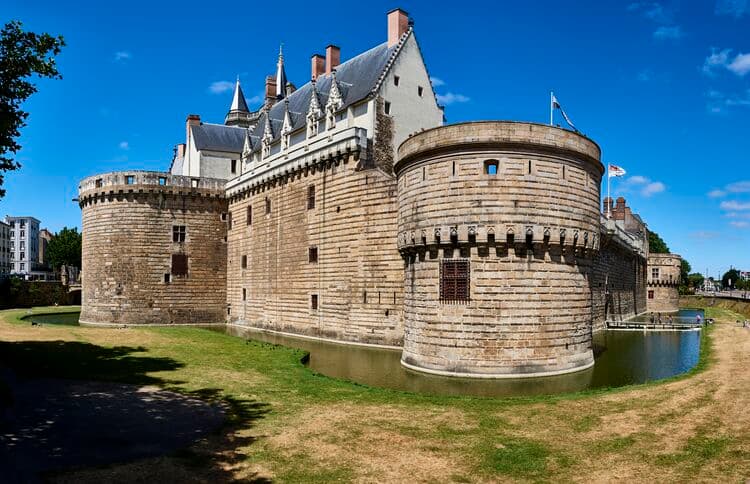
East Sussex students at the Eco Château: developing skills, confidence and opportunity
Erasmus+ funding gave construction and catering students a life-changing opportunity, building practical skills and confidence through real-world experience in France. With all the students now in full-time work, the project shows how skills-based learning in an international setting strengthens employability and inspires young people to step beyond their comfort zones.
Countries covered: | England, France |
|---|---|
Period: | 2015-17 |
Funding: | €341,920.00 |
Type: | Mobility of vocational education students |
Over a four-year period, Erasmus+ funding allowed construction and catering students from East Sussex Coast College to take part in a two-week placement at the Eco Château project in northern France. The programme was designed for students from the Construction and Catering courses run by the East Sussex Coast College. Staying in a hostel in the small town of Tinchebray-Bocage in Lower Normandy, students worked each day alongside tutors and project staff supporting the restoration of a nearby 17th century château and cooking for the construction workers. The opportunity arose after the college was approached by an organisation in Brighton that facilitated Erasmus projects.
Although the two groups of students had very different jobs, they were all working towards the same goal: getting practical work experience, developing a range of life skills such as communication, team building and problem solving, and seeing the world beyond their local area.
Learning beyond the classroom
For the Construction students, the trip was a chance to work on a real renovation project rather than simply learning in a classroom or workshop. They took part in a range of practical jobs at the Château, learning sustainable building techniques and problem‑solving on a live site. They got an insight into the challenges of working on an old building while learning to adapt to unfamiliar situations. They also had to be flexible and work together to get things done.
The Catering students had just as much responsibility. They ran all the food services for the group, including breakfast, lunch and dinner. This meant planning high-quality menus while working within a budget, buying ingredients and making sure everyone was fed. They sourced produce from local markets and suppliers and also had the chance to see where food comes from through visits to farms, food producers and factories.
There were some great additional trips too, including visits to a local goat farm and distilleries. These visits gave students the chance to experience French food and drink production first-hand and see things that they simply wouldn't have encountered back home.
One of the highlights was a gastro evening for local residents and the Mayor. The Catering students were responsible for planning and delivering the event, giving them the chance to put their skills into practice for a real audience. It was a great way for the students to meet local people and feel part of the community.
Building confidence and resilience
Over the four years, at least 100 students benefited from the programme. For some, it was the first time they had ever been away from England, so it was a big step. And the impact was significant. Staff saw a real difference in students when they came home. They were more confident, more independent and much more willing to have a go at things that were outside their comfort zone.
The trip also brought students and tutors closer together. Communication and teamwork improved, while tutors also noticed stronger relationships with students as they worked together in a very different environment.
But the best bit about the project was seeing how adaptable and resilient students became when placed in unfamiliar circumstances. Students who might initially have lacked confidence became focused, purposeful and determined when put under a bit of pressure. They rose to the challenge.
A lasting impact
The benefits have now extended beyond the trip itself. All of the students who took part are in full-time work and we believe their Erasmus experience played a part in preparing them for the workplace.
The project also strengthened collaboration between departments and created a lasting relationship with the Château. It clearly demonstrated the value of experiential and sustainable skills-based learning while contributing to the wider community by helping preserve an important heritage building.
We have recently merged with Eastbourne College and are keen to explore how we can collaborate on future Erasmus projects. Building on the success of this experience, we hope to create further opportunities for young people to broaden their horizons, develop practical and professional skills, and discover what they are capable of achieving.
So, if you are wondering whether to look into an Erasmus-funded project, I say “Go for it!” The Erasmus project gives so many more opportunities and develops young people's knowledge, skills and behaviours far beyond their chosen course.
To find out more about this case study, visit the Erasmus+ project database
Go for it! The Erasmus project gives so many more opportunities and develops young people's knowledge, skills and behaviours far beyond their chosen course.
Jeff Jordan, Deputy Head of Curriculum