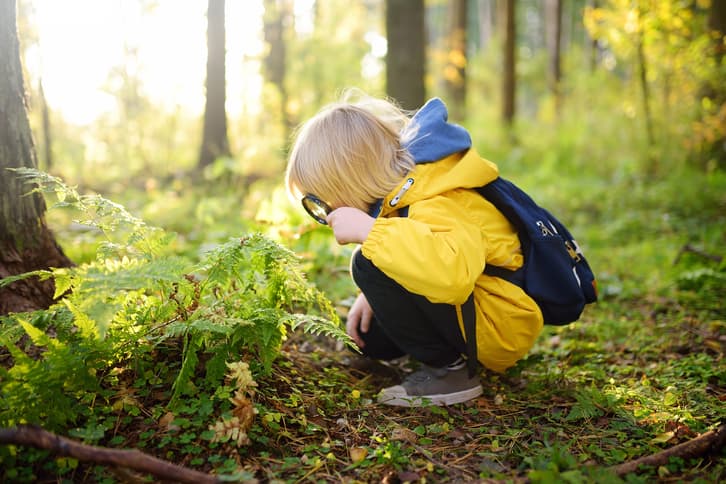
Nature based sensory development for special needs children
A 12-month Erasmus+ project brought together partners from Finland, Slovenia and Türkiye to explore how nature-based learning can support sensory development for children with special needs. It aimed to support teachers with skills, resources and confidence in outdoor activities, provide training and guidance, and strengthen cooperation between educators, NGOs, SMEs and therapists to make outdoor learning more inclusive, accessible and sustainable.
| Countries | Finland, Slovenia, Türkiye |
|---|---|
| Period | 2024-25 |
| Funding | €60,000 |
| Type | Small-scale partnership |
Background: defining the need
The partnership of experts from three countries applied to Erasmus+ for funding for this project after identifying a clear need to improve sensory development practices for children with special needs through nature-based learning. Teachers working with children with special needs often want to use outdoor environments but lack the skills, resources and confidence to do so. At the same time, many existing sensory resources are expensive or difficult for schools to access. There is also limited practical guidance showing educators how nature can support sensory development and inclusion.
Partners from education, NGOs, SMEs and occupational therapy recognised the need for affordable Sensory Play Areas (SPAs), practical teacher training and stronger cooperation between different professionals. There was also a clear need to help parents and children with disabilities take part more fully in outdoor activities.
The project set out to show that nature itself can become a valuable, low-cost learning resource. By reconnecting children with natural environments, the partners aimed to create sensory-rich spaces that support children's development, wellbeing and inclusion.
Objectives: sharing expertise to improve access to nature-based learning
The main objective was to strengthen teachers' confidence and skills in using nature as a supportive environment for sensory development. The project provided educators with practical methods, training and resources that they could use in their everyday work.
Another objective was to design and model three Sensory Play Areas using natural, low-cost materials that make sensory learning more accessible and sustainable. Two international training activities allowed participants to share knowledge, combine expertise from different sectors and develop an innovative nature-based sensory development model.
Implementation – how the project got started
The project began with a kick-off meeting in Helsinki, where partners agreed roles, responsibilities and timelines. This was followed by two international Learning, Teaching and Training activities. The first, in Antalya, focused on sensory integration, outdoor play, inclusive approaches to nature and collaboration with occupational therapists. The second, held in Slovenia, explored inclusive nature practices further.
Partners then put the learning into practice by creating SPAs in their school gardens, finding solutions in natural and low-cost materials wherever possible to show that effective sensory environments do not have to be expensive.
The activities were tested through pilot sessions involving 15 children with special needs. These sessions gave educators an opportunity to see how children responded to the activities and demonstrated positive effects on engagement, well-being and sensory processing.
Alongside the practical work, partners developed the Nature-Based Sensory Development Toolbox. It brings together outdoor activities, ideas for sensory play, guidance on creating SPAs and useful background information. The resource was translated into the partners' languages and made available more widely. Local workshops, online meetings and an online seminar also helped share the project's learning with teachers, parents and occupational therapists.
Over the course of 12 months, members of the project partners received training from experts in sensory integration and were inspired by educators specialising in nature-based learning. Throughout the journey, a great deal was learned from one another, wisdom was drawn from nature, the benefits for parents and children were experienced and accessibility to nature for all became a purpose and mission.
Results and impact
One of the project's main achievements was the creation of the open-access Toolbox. Now available in four languages, it gives educators, therapists, parents and schools practical ideas that can be adapted to different settings and needs. In this way, it fills a gap in inclusion, innovation and green education.
Three Sensory Play Areas were established across the partner countries, creating accessible outdoor spaces where children could learn and explore through their senses. The pilot activities with 15 children showed positive effects on engagement, wellbeing and sensory processing.
For teachers, the project provided more than information. The international training and practical experience helped build confidence in taking children outdoors and using natural materials creatively. For children, the project created opportunities to experience learning in a more active, sensory-rich and enjoyable way. Parents and professionals also gained practical ideas for supporting children outdoors via the project website, www.inclusivenature.com, which extends the reach of the results to educators and families.
The project was concluded with a spirit of innovation and inclusivity. What this project taught was clear: true inclusion is not only about recognising individual differences, but also about creating meaningful, sensory-rich environments which reconnect learning spaces with nature.
To find out more about this case study, visit the Erasmus+ project database.